For Faculty & Education
Professional education should prepare learners to use what they know in practice. That means designing opportunities to make decisions, work with others, apply knowledge, receive feedback, and understand how professional work actually happens.
The numbers behind the work
of employers look for evidence that a candidate can work effectively as part of a team.
more likely to fail: students taught primarily through lectures rather than active learning.
overall effect size favoring simulation with deliberate practice over traditional clinical education.
studies measuring collaborative behavior found significant improvement after IPE.
Students need opportunities to practice decision-making, collaboration, communication, and professional judgment before those abilities are expected in practice. Faculty development should help educators design those opportunities deliberately and assess what learners can actually do.
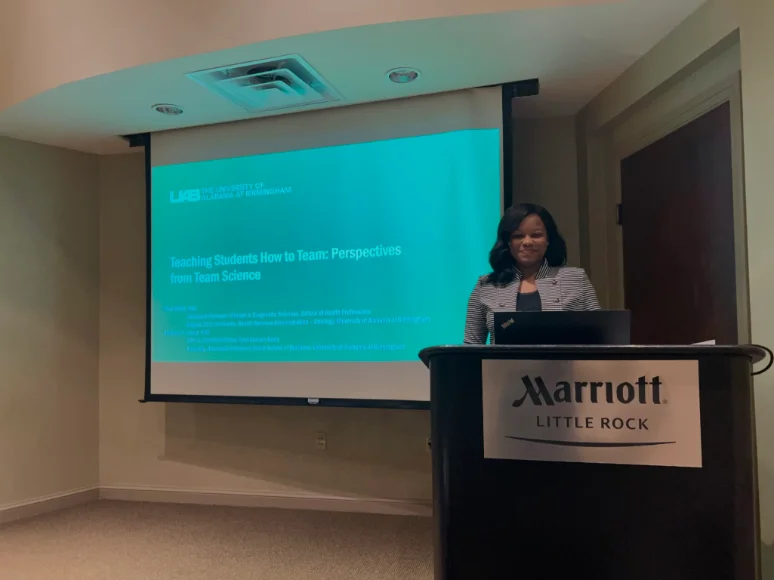
Teaching Students to Team
A faculty workshop for designing how students learn, practice, and receive feedback on teamwork.
I assign group projects every term and I still end up mediating the same complaint in week ten.
What this includes
Students are regularly expected to work in teams, yet the assignment itself may be the only guidance they receive about how to coordinate work, divide responsibility, make decisions, manage unequal contribution, or address conflict.
Faculty work with their own courses, assignments, scenarios, and rubrics to decide what teamwork students actually need to learn and where that learning should occur.
From Intellectual Work to Professional Platform for Scholars
For scholars who want to turn a body of teaching, research, presentations, tools, and ideas into a deliberate intellectual platform with a clear direction, dissemination strategy, and visible public presence around their expertise.
I have twelve years of material and no idea which parts are actually my contribution.
What this includes
Participants define the intellectual territory they want to be known for and create a strategic plan for how their work will develop over the next several years. They identify the audiences and communities they want to reach, decide which ideas and projects deserve continued investment, and map how their scholarship, presentations, teaching, educational products, public scholarship, media, professional platforms, and future work can reinforce one another.
The work also focuses on visibility and dissemination: where the scholar should show up, how often their ideas should travel beyond academic journals, and how to create a recognizable public-facing presence around their knowledge without reducing the work to personal branding.
Building AI-Supported Products for Education
For educators developing an AI-supported tool, agent, learning resource, or workflow around a real educational problem.
We have access to AI. We still have not decided what educational problem it should solve.
What this includes
Participants begin with the educational problem and the person the product is supposed to help. They define what the product needs to help that person do, what evidence and subject-matter expertise it requires, which decisions should remain with the faculty member or learner, and how the product will be evaluated.
From there, participants map the user and AI workflow, address issues such as accuracy, privacy, bias, accessibility, authorship, and academic integrity, and develop a defensible prototype or prototype plan.
The aim is a useful educational product with a clear reason for using AI and a practical way to determine whether it works.